Sound is the earliest warning your process gives you.
Sound tells you what's happening inside the process while it runs. That's often the first place a fault shows up.
Where acoustic monitoring fits.
| Method | Good at | Falls short |
|---|---|---|
| Cameras and vision | Surface features and geometry in clear conditions | Arc glare, plasma and fume; can't see inside a nozzle |
| Thermal monitoring | Heat distribution and cooling | Misses mechanical and feed faults |
| Machine parameters | What the machine was told to do | Shows the setpoint, not what happened |
| Post-process inspection | Detailed, certifiable results | Finds faults after the cost is spent |
| Acoustic monitoring | Real-time changes in machine, process and part | Digital signal processing can only monitor one condition at a time |
ACOUXIA solves the problem with acoustic monitoring by listening to multiple conditions simultaneously.
Why ACOUXIA specifically.
What changes on the floor.
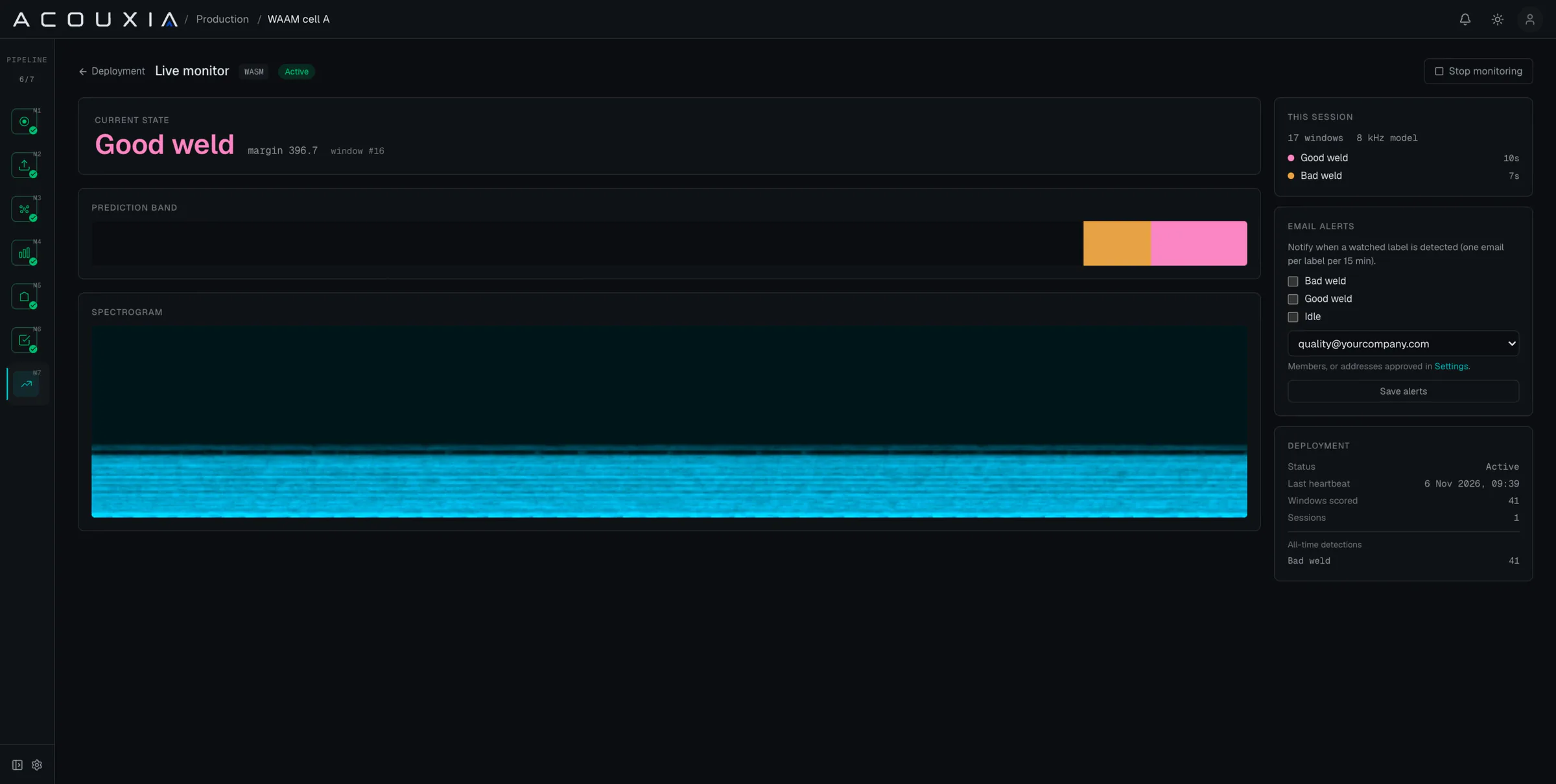
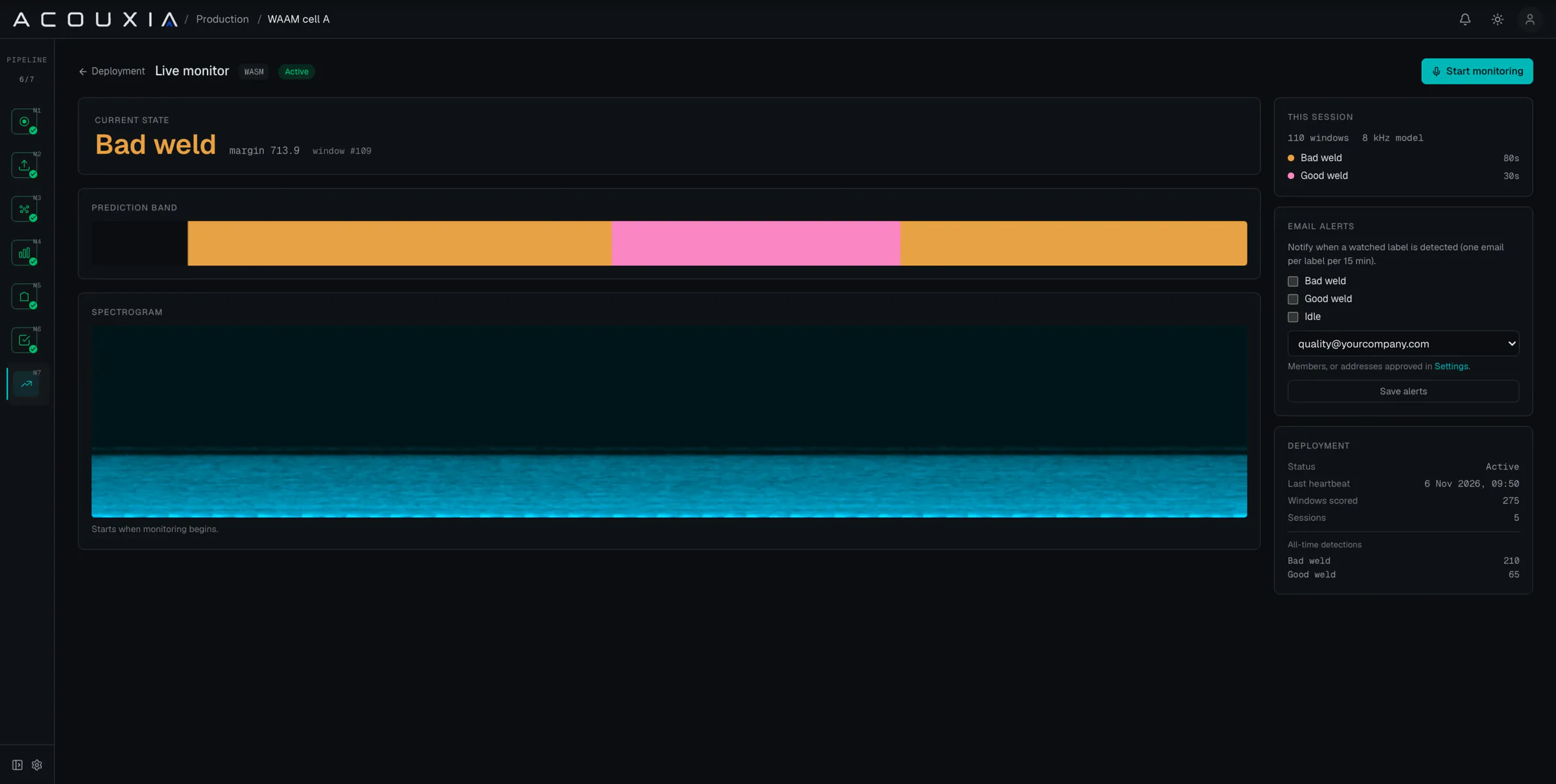
What this means for each team
Operators get an alert at the machine that says what changed. Maintenance sees collisions, wear and failing components before they stop production. Quality knows which builds to check and where. Engineering gets a sound-based history of each build for traceability and process improvement. New operators get the early warning that used to take years on the floor.
The engineering team behind ACOUXIA.
ACOUXIA is the self-serve platform from Automation Acoustics, a Melbourne deep-tech company. In production since 2021, deployed with OEM and government customers since 2024.
Visit Automation Acoustics ↗